Welcome everybody! Today I will be going over one of the oldest and most commonly used openings in the game of chess: The Italian Game.
What is the Italian Game?
The Italian Game is a simple opening for White, in which they develop the Knight on g8 and Bishop on f8. It starts with the moves 1. e4 e5 2. Nf3 Nc6 3. Bc4

Starting Position of the Italian Game. Photo: chess.com
Pros and Cons of the Italian Game
Pros:
For beginners the Italian Game is a very common choice due to its playability and solid structure. Furthermore, it’s aggressive nature makes it easy to create threats on the board. In fact, many grandmasters frequently use the Italian to get solid positions and pressure their opponents.
- Easy to play
- The Italian Game nearly always gets players in solid positions where they can make threats while also keeping their king safe.
- Quick Development
- In the Italian, white is able to develop their pieces incredibly quickly, while also opening up the possibility of castling, which can solidify the king.
- Control of the Center
- Beginners are usually told to put pressure in the center, and that is exactly what the Italian does, by getting an active knight and bishop early on in the game, while also allowing the king to castle.
- Beginners are usually told to put pressure in the center, and that is exactly what the Italian does, by getting an active knight and bishop early on in the game, while also allowing the king to castle.
All in all, the Italian Game can be beneficial for players due to its easy playability, quick development of pieces, strong defense, and control of the center.
Cons:
Although the Italian Game is a solid opening, there are a few key weaknesses that black can exploit to either get a drawing position or build up an advantage to potentially score a win.
- Weakness #1 – Bishop on c4
- Although the bishop on c4 has a great diagonal, it can be susceptible to attacks and threats, such as pawn attacks on b5 and d5. This could possibly give black a developmental advantage, leading to potential problems for white.
- Weakness #2 – Common Draw-ish Lines and Positional Games
- As the game progresses, black has many opportunities to convert the game to a draw by trading pieces like the knights and bishops to simplify the position, as well as finding tempos by attacking minor pieces to enable black to get ahead on development.
- Moreover, the Italian Game can morph into an incredibly tactical position where the position is closed and neither side can make it more active, which can be hard to play and lead to many mistakes.
By utilizing the weaknesses of the c4 bishop, black can gain tempos and put the pressure back on white, as well as trading pieces and moving the game to a tactical position, allowing the game to drift towards a draw or black advantage. Nevertheless, white has vast options that can be used to counteract black’s plans.
Different Variations in the Italian Game:
As an opening that has been played for over 400 years, there are many different ways to play the Italian. However, there are three main variations to the Italian: Giuoco Piano, Evans Gambit, and Giuoco Pianissimo.
Giuoco Piano:
The most common response to 3. Bc4 (by white) is black playing 3. … Bc5. By bringing both bishops out, the position can become very confusing as both sides aim to quickly develop their pieces. There can be many threats and tactics going on at a single time, resulting in a positional game. Furthermore, both sides have opportunities to break the center open at any point in the game.
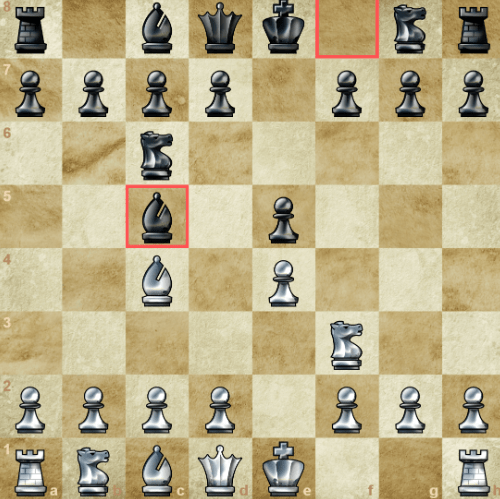
Both sides get an active and positional game with lots of development Photo: theopenchess.com
Evans Gambit:
The Evans Gambit is recognized as one of the more attacking lines to the Italian. It is a variation of the Giuoco Piano, where White essentially gives up their b-pawn on move 4. They play this in order to develop quickly and also divert the c5 bishop. The reason this opening is considered very aggressive is due to a few reasons, such as:
- If black accepts –
- White can eventually play c3 and d4, opening up the center and leading to an active game.
- White can also open up diagonals to play Qb3 or Ba3, causing problems for black’s castling.
- If black declines with Bd6 –
- White can continue with c3 and d4 plans
- If black declines with Bb6 –
- White can castle and then play a4 to threaten the bishop

The Evans Gambit is a great choice for beginners and intermediates who love aggressive play. Photo: chesspathways.com
Giuoco Pianissimo:
The Giuoco Pianissimo tends to be one of the slower and more solid approaches to white’s game. It is defined by white playing either 1.e4 e5 2.Nf3 Nc6 3.Bc4 Bc5 4.c3 Nf6 5.d3, or 1.e4 e5 2.Nf3 Nc6 3.Bc4 Bc5 4.d3. As shown below, d3 is the defining move of the variation. White is able to keep the center closed, enabling a more positional and solid game.
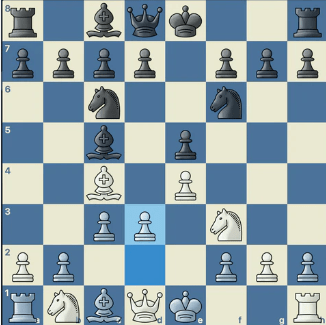
For people who like to play more defensively and slowly, the Giuoco Pianissimo can be a good choice of opening. Photo: royalchessmall.com
Conclusion:
After learning the basics of the Italian Game, such as its style, pros & cons, and common variations, there is not much else to show. It is up to you to try this opening out, find patterns, and become experts at the Italian, further expanding your repertoire. Until next time!
 The Checkmate Chronicles
Leave a comment