Welcome back everyone! For today’s blog post, I will be giving you a brief introduction to one of the most solid defensive openings in chess: The French Defense.
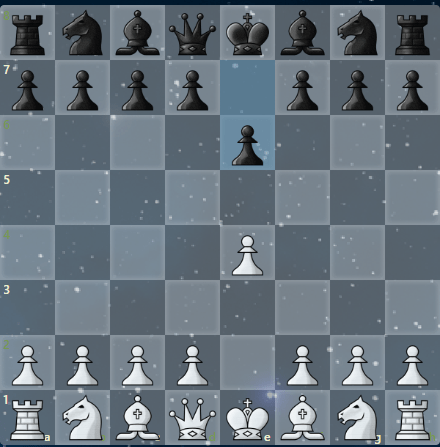
The French Defense is one of the most enduring and resilient openings in chess. Characterized by the moves 1.e4 e6, this defense allows Black to contest the center early while maintaining a solid pawn structure. Its rich history and strategic depth make it a favorite among players of all levels, from beginners to grandmasters. In this blog post, we’ll explore the key ideas, variations, and strategies behind the French Defense, giving you the tools to incorporate it into your repertoire effectively.
Why Play the French Defense?
The French Defense offers several benefits to players looking for a dependable response to 1. e4:
- Flexibility: Black can choose from several plans, allowing for adaptability based on White’s setup.
- Counterattacking Potential: While initially passive, the French Defense often leads to sharp counterattacking opportunities.
- Solid Pawn Structure: The signature pawn chain ensures a stronghold on the center, making it hard for White to break through.
On the flip side, the light-squared bishop often becomes a challenge. Addressing this issue through development and making use of your other pieces is crucial for success in the French Defense.
Important Variations:
1. The Advance Variation (2. d4 d5 3. e5)

This variation sees White push the e-pawn to gain space, setting the stage for a pawn chain. Black responds by undermining White’s central structure, often with moves like …c5 and …f6.
Plan for Black:
- Attack the base of White’s pawn chain (d4) using pawns and pieces.
- Develop actively, especially the c8-bishop, to neutralize White’s space advantage.
2. The Exchange Variation (2. d4 d5 3. exd5 exd5)

Here, White exchanges pawns early, leading to symmetrical pawn structures. While seemingly drawish, this variation often leads to subtle positional battles.
Plan for Black:
- Develop pieces harmoniously and look for imbalances later in the middlegame.
- Maintain a strong pawn structure and aim for activity on open files.
3. The Tarrasch Variation (2. d4 d5 3. Nd2)

White delays the pawn push to e5 and prepares for flexibility in development. This line often leads to a rich middlegame with varied pawn structures.
Plan for Black:
- Target White’s center with moves like …c5 and …Nc6.
- Keep an eye on dynamic opportunities while completing development efficiently.
4. The Classical Variation (2. d4 d5 3. Nc3)
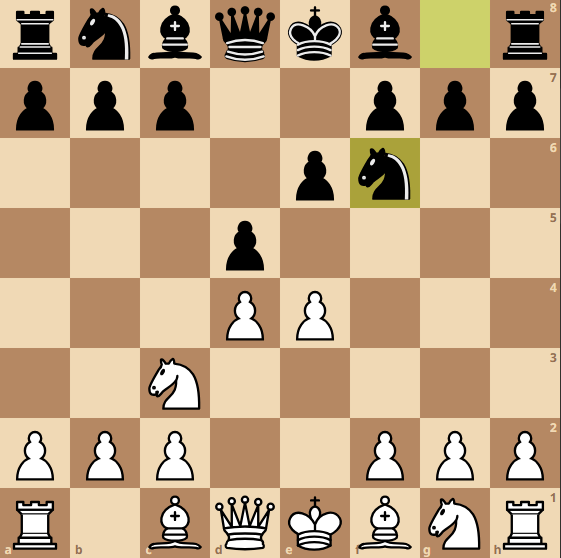
This is one of the most popular continuations, where White develops naturally and prepares for central control. Black has multiple ways to respond, including the Winawer and Steinitz variations.
Winawer Variation:
- e4 e6
- d4 d5
- Nc3 Bb4
The pin on the c3-knight leads to double-edged play, with dynamic pawn structures and open lines for tactical opportunities.
Steinitz Variation:
- e4 e6
- d4 d5
- Nc3 Nf6
Black attacks White’s e4-pawn immediately, aiming for quick development and counterplay.
Strategic Themes in the French Defense
1. Undermining the Center
A recurring theme in the French Defense is attacking White’s pawn chain, especially the d4-pawn. Moves like …c5 and …f6 are instrumental in challenging White’s control.
2. Handling the Light-Squared Bishop

The “French Bishop Problem” requires creative solutions. Options include:
- Developing it actively via …b6 and …Ba6.
- Exchanging it strategically, often with …Bd7 and …Bb5.
3. Counterplay and Patience
The French Defense often starts slowly, with Black setting up a fortress-like structure. However, once the middlegame unfolds, counterplay arises through pawn breaks and piece activity.
Famous Game Featuring the French Defense
Samuel Reshevsky vs. Rafael Vaganian, 0-1, It Skopje (Macedonia) 1976:
The book “World’s Greatest Chess Games” describes this as one of the best games played featuring the French defense. This game sees Rafael Vaganian play the closed variation of the Tarrasch.
It was stated that “[d]espite the peculiar meandering of the white king in this game…Reshevsky is merely following the theory at the time! This however proves to be an unfortunate idea against an inpired Vaganian. After 16 moves the Armenian has already sacrificed two pieces, but the white king has arrived on the half-way line. Five moves later Black has recouped his material with interest”
After 14 moves, Reshevsky makes a blunder that leads Vaganian to make 3 sacrifices in a row! This wins the game and cements it as one of the most brilliant of all time.
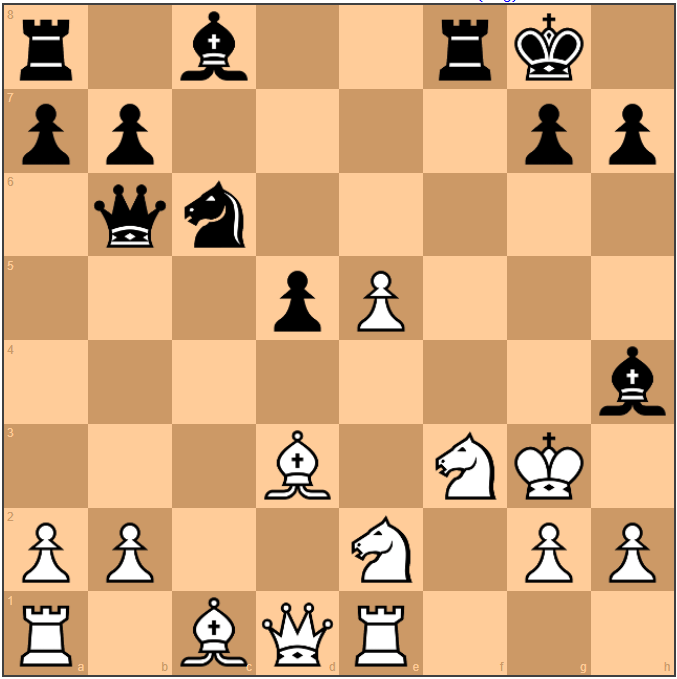
The full analyzing of the game can be seen in a study made by FM Sargis Manukyan here: https://lichess.org/study/vlN212N2/vqI8eJTR
Studying these games can help you appreciate the depth and richness of the French Defense.
Final Thoughts
The French Defense is more than just a solid response to 1. e4. Its defensiveness and ability to withstand strong attacks make it a gateway to dynamic middlegames and rich positional battles. Whether you’re a beginner seeking structure or an advanced player looking for counterattacking opportunities, the French Defense has something to offer.
Dive into its variations, experiment with different setups, and embrace the complexities of this timeless opening. Mastering the French Defense might just make you a more versatile and confident chess player. Stay tuned for next time!
 The Checkmate Chronicles
Leave a comment